

Onward
Post-mortems aside, let's move on... with purpose, and fearlessness.

While I have purposefully sought to avoid writing in the immediate aftermath of the recent election, the results have been at the forefront of my mind. It’s not that I don’t have an opinion, or an emotional valence, that corresponds to some very real concerns. However, I am also committed and continually surprised by what the unknown offers. The fact is I have an assortment of reasons to fear, and (at this point) and unknown assortment of reasons to continue to believe in the promise we call “America”. I don’t know what’s going to happen, and neither do you. We might think we know, but we can only assume based on information that we’ve consumed. So my equanimity in relation to what is in store for us will remain ahead of all my negativity and suppositions based on what I think that I know. Just because it’s my truth doesn’t mean it’s true. Or false. It’s like when people “choose to believe” as a way of throwing a stake in the ground declaring a position. This doesn’t mean that their choice makes anything more or less true, it just makes the decision an egoic attachment that leads to suffering. I could, for example, choose to believe that the earth is flat. This doesn’t make it true. It only points to my egoic attachment to, in this case, terra-flatness. We can extrapolate in the political realm, as well. You may choose to believe in the basic platforms of either the Left or the Right. This doesn’t make them true. It does, however, allow for collective clinging which supercharges suffering and leads to certitude. “Certitude,” according to Oliver Wendell Holmes, is the birth of war. Hence, our current, cold certitude, is alive and well in our respective camps.
Speaking of camps, I’ve been impressed with how so much has been said about “why” the election unfolded the way it did, and how little has been said about how we got here. And, for the record, so much analysis has been preferred that I hesitate to make any comments at all. But I am concerned with one thing that seems to have been missed as we move further and further away from Election Day. I’m sure my view is somewhat aberrant and in many circles, unwelcome. But a few things stood out to me that I will put out there, into the Social Media ether.
Dems got caught flat-footed on the whole immigration thing. I was amazed how there appeared to be an inappropriate conflation between securing our borders and cruelty. What was cruel was that Steven Miller (and new border ‘czar’ Tom Homan) set up a system where kids were separated from their parents without tracking systems to reunite these families. Trump’s policy broke families apart. This is shameful, but the bigger issue, of proper (and appropriate) border security, got lost in this humanitarian stain on the US conscience. Yes, it was at our own hand. Yes, it showed the US at her worst. Yes, it was mismanaged, misaligned and cruel. However, securing our borders was a real issue that the Left ceded to the Right in ways that were costly. Despite Trump’s approach and despite his lackeys making jokes about Puerto Rico’s poor standing, he won over Hispanic voters.
Dobbs/Roe v. Wade turned out NOT to be a winning issue like the Left expected. Rather, likeTrump As a father to daughters, I find this disheartening and have suggested that my teens consider the states’ reproductive health policies before they apply to colleges. I’d also point out that female voters, despite Dems appeals and their projections, broke for Trump. So much for this election being about women. Instead, it was about men and what it means to be one.
With this gender issue in mind, the Left, and most of us affiliated with Left-leaning approaches to governing, didn’t seem to understand how building a coalition, or a party, around identity and one’s lived-experience, can make it hard establish empathy. Without empathy the path of mutual understanding and shared humanity gets covered-up. Finding our way, as we’ve discovered, becomes even more challenging when we don’t know who to believe and we’ve grown accustomed to looking to others in a variety of power positions to tell us what, and how, to believe.
I should point out that this last point may be the most difficult for us to engage on an intellectual level, but, in my view, it’s critical. There’s a pervasive laziness within the electorate. Democracy takes work. Without an informed electorate democracy dies on its own vine. To this end, the Left has lost a generation of young men because it failed again and again at delivering the kind of messaging that resonated because of its appeal and its generosity. If an electorate doesn’t see value in its individual votes, it is vulnerable to messaging that “floods the zone” with half-truths and lies that are seductive because of their simplicity.
The Left and Right have battled against each other’s messaging in ways that have led to confusion which leads to further alienation. “I don’t know who, or what to believe” leaves a gap of vulnerability where someone who says, “I alone can fix it,” becomes a quasi-messiah who offers a reprieve from all the facts and points to all the ways in which a person, despite his or her blessings, feels beaten down by a system that won’t allow for them to stand in the ways that make good sense to them.
The Left has played into this train wreck. The Left has built a system that is deeply oriented around the idea that we are first our gender, or race, before all else. There are reasons for this that I find myself supporting and agreeing with upon occasion, but to allow for one’s identity to be the most profound determiner in one’s political affiliation and ideology can only ever build a house of cards.
To get specific, we find this house of cards collapsing when a high functioning male lives and works in a society that clumsily misappropriates all masculinity with toxicity. I have spent close to thirty years around teenagers and have become painfully aware that young men, feel this pressure, are angry about the disparity, and, as a result, are in trouble in ways that we will pay for in the future. Don’t take my word for it, though. The scholarship is clear and plenty of others have seen it and expressed their concern.
To wit:
The classroom is only one place in which this disparity can be observed. Young men today are three times more likely to overdose, four times more likely to commit suicide, and a staggering 14 times more likely to be incarcerated than their female peers. 98% of all mass shooters are male. Violence, addiction, and self-harm all represent a desperate cry for help from a generation of struggling young men.
These data align with my years of experience around adolescent boys. And this is a big enough topic to devote another post to in the very near future. I’m working on it, as they say. But to put a finer point on this, much was made of Harris’s passionate defense of women’s health. This was not only something I supported, but I erroneously imagined that this issue would play itself out in ways that led to a win for her. I, and others, were wrong. This was less about “women’s issues” and more about, what it means “… to be a man.” Trump, although undeniably, a pathological representation of what it means to be a man, speaks to those who feel like they’ve been left behind. Trump tapped into the cultural anxieties of men, and the people who love them. Then he won.
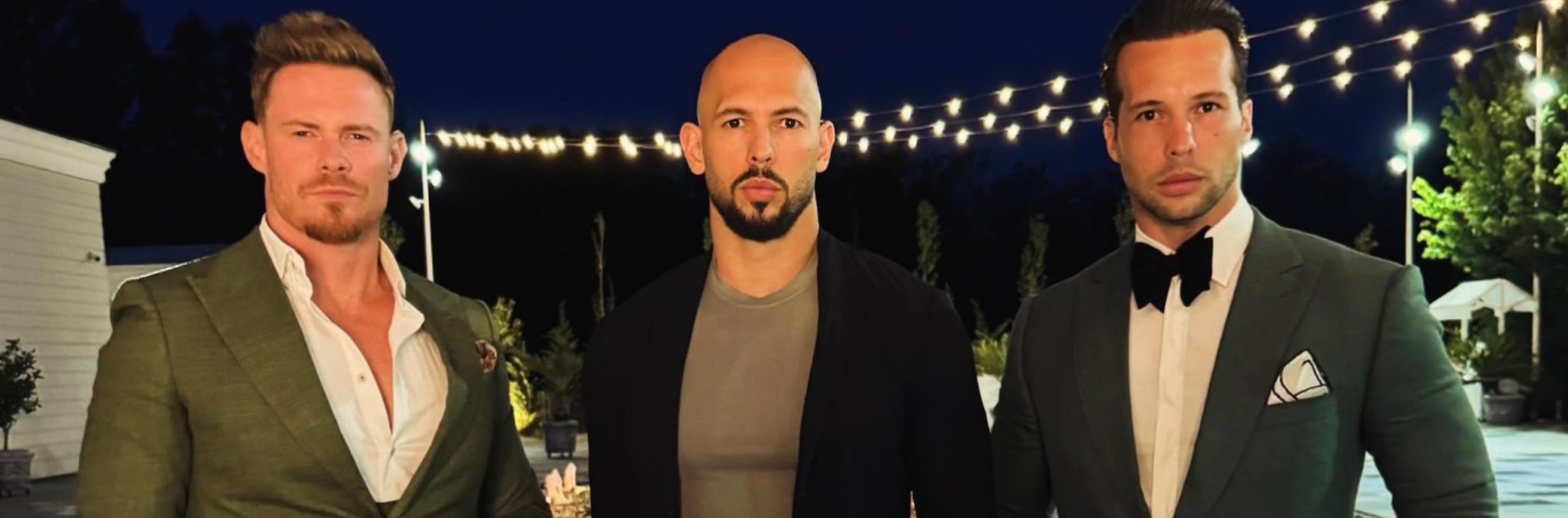
Trump stands, or fights, for the emasculated, the forgotten, the impotent, the uneducated, any men who see themselves as vulnerable to being replaced by those who have been traditionally marginalized. Men, and the “manosphere” were a much larger part of Trump’s win than Dobbs and women’s health concerns could ever have been for Harris, it seems. This begs the question, why wasn’t this discussed in greater depth? Because, I would propose, to do so aligns the questioner with a decidedly anti-Left position, where privilege is questioned in the face of a lived experience. When the Right spoke of it, its language was less about why their position is correct, but rather why the Left was so wrong.
It’s a performative contradiction like where postmodernism claims that there are no overarching narratives, which is, itself, an overarching narrative. Their argument collapses under its own weight. Put another way, a young male, especially if he happens to be white, is living as part of what he sees as an immovable power structure that has traditionally served him well. He, therefore, should have nothing to complain about. The fact is he’s decrying what’s broken, in his view, and no one is listening. Except Trump and the MAGA movement. As members of the Left, these men know that their work is to remain silent since they are the empowered elite, simply because of the concentration of melanin in their skin and their luck at being born male. No complaining, young white males, less you be canceled by the Though Police for not toeing the Left’s line. The real question that has gone unnoticed: Is it any wonder there is resistance to the Left’s co-opting of thought? Agree with us or you’re a racist. Agree with us or you’re intolerant and a reflection of ignorance. Nevermind that the Left’s intolerance of intolerance is part of the problem.
My experience has offered me an interesting perspective on how this has unfolded. Too often I’ve seen my colleagues and district policy to be at war with war. This assigns a culpability that gets ignored. As both a high school teacher, athletic coach, and site principal, it seemed to me that, over decades, the seeds to a pervasive idea that history was littered with toxic masculinity were sown. I have never disagreed with much of this sentiment. Just ask my former students. History is, after all, HIS (masculine possessive pronoun), STORY (a narrative that belongs, in some way, to “him”). Keep in mind, that this “him” was also the guy who won whatever contest allowed him to write HIS STORY.
In this way, I see that the Left’s need to atone for humanity’s sins has left a generation of young men feeling adrift; like history’s ills are their fault. This is unfair and counter-productive. We all have a responsibility to make ours a better world and many of us, myself included, benefit from situations and realities oriented around luck. Young men, on the other hand, who are continually blamed for history’s assortment of injustice, have learned to get their backs up when they are collectively accused of being the reason that there is so much suffering, injustice, and inequality in this country and the world. This isn’t fair to them. Nor is it fair to the rest of us since it absolves vast segments of a population of any responsibility. It’s inaccurate. It’s also a time bomb. Making things worse is that this group of angry young men have increasingly developed a tendency to align with information systems, and content delivery that support widespread inaccuracy for which we all may pay over time. We’re seeing it now. And it’s spreading. Consider that women, blacks, Hispanics, and young men voted for Trump more than they voted for Harris.

I believe, these young men were encouraged to do so based on the misinformation that they consumed listening to Joe Rogan’s podcast. Rogan, and his conspiracy-laden theories of contemporary reality are bolstered by lies and his inability to meet a controversial comment with anything other than some facsimile of, “Huh, interesting,” make his kind of superficial ignorance a danger to us all. His contortions and ignorance simplifies things for his young male audience, keeping them from having to do the heavy lifting of educating themselves. I’m reminded of Sen. Daniel Patrick Moynahan who said so articulately, “You are entitled to your opinion. But you are not entitled to your own facts.” Rogen, and others, would do well to bring the required humility for any responsible broadcaster to continually meet Moynahan’s admonishment to move us, AS A PEOPLE, forward in ways that allow for us to help each other, as opposed to inspiring us to hate each other based on belief-structures that induce and capitalize on fear. Be fearless.
Seeing history and each other as a story that is inspired by hate, or that it is, at least, hate-adjascent, can be valid AND unfortunate, at the same time. How did this dichotomy unfold? Contemporary life, since 1960, or so, in the US seemed to absorb a kind of shared guilt over our misdeeds and turned this narrative of guilt into a new version of meaning where postmodern claims against all previous narratives offered intellectual solutions to the world’s, and our country’s, inequities. There was no such thing, this theory goes, as a narrative that is more relevant than your own. Add to this that guilt is merely anger directed internally.
Aligning too tightly with any approach to our story-telling can’t help but put all of us on another unwelcome cycle of ego-driven distortion that can’t serve a more comprehensive, deeper, more widely shared truth with its inherently limited claims. These limited claims that see themselves as Absolute are where more virulent approaches to our shared myth-making unfold. These “small” stories still have lots of power, especially when shared, or pushed up on our algorithmically enhanced feeds because of the outrage they create. These contortions of meaning can push us off course (as they have), where, dare I say, masculine qualities of strength, for example, get confused with abusive power; confidence gets confused with arrogance; decisiveness gets confused with inflexibility and an unwillingness to hear from others’ experiences; fighting for anything, or any reason, is anathema to any real success; and if it’s not gentle, it’s wrong. Women should be in charge, right? Except for the “masculine” like, Catherine the Great, Joan of Arc, Golda Meir, Indira Gandhi, and Margaret Thatcher. Sheryl Sandburg got it wrong when she said, “…female leaders don’t go to war.” Like the rest of us, she should do her research before she pops off and looks foolish in the face of actual data:
Authors of the book Why Leaders Fight analyzed every world leader from 1875 to 2004 and statistically examined gender differences in military aggression. They found that 36% of the female leaders initiated at least one militarized dispute, while only 30% of male leaders did the same.
To be sure, this confusion/conflation, is understandable on some levels. But this comprehensibility doesn’t make belligerence an appropriate response in all cases. Nor is a military response to be avoided in all cases. There is, of course, a pathological and toxic version of all ideas and methods, on both sides, that can poorly inform decision-making. We might appropriately call it some sociopolitical version of “The Goldilocks Effect” wherein responses can either be too hard, or too soft. Either way, over-rotating should be avoided and give a balanced, Middle-Way as Buddhists might say, safe passage into our consciousness, our dialog, our policies, and our actions. We shouldn’t be too hard. Nor, however, should we be too soft and avoid appropriately responding in ways that are flaccid and beg for clarity, less we find ourselves slipping into a familiar, albeit, confused space that generates the very damage it seeks to fix. Instead of falling into this trap, we need to reacquaint ourselves with nuance and the fearlessness required to stay there. But this is hard and, according to the prevailing sentiments, this hard work might require us to face things we have spent lots of energy avoiding. Truly facing what we’ve avoided so well, or not so well, might both require fearlessness and, at the same time, when we find that there isn’t much fearlessness in the well, a response may get triggered that is uncomfortable within me and/or within others. Therefore, because it’s scary, this authentic, intentional exploration should be avoided. Too many of us might think, at the prospect of really looking within ourselves, “at least the world should be prepared for the tantrum I will throw if I’m forced to manage a process of internal questioning that might lead to answers I don’t like.” Toughen up. Be fearless.
And grow up. Your country, your progeny, your humanity, your world needs the kind of maturity, the kind of adult, that can manage his or her discomfort with grace as opposed to resentment. This goes for political candidates as well. we can’t control others… only our reaction to them. Letting our emotions run our experience isn’t healthy. Nor is over-balancing our responses in favor of a strict logic and intellectualism healthy. Take responsibility for your fire, by taking its temperature down. “I can’t help it,” you say. Then you’re still ruled by an immaturity that’s causing damage. Own your actions and reactions. Know how your fire starts and what it burns. This is maturity. Anything less allows for our adolescent tendencies, forged in the awkward foundries of culture and childhood to rule us, and by extension, our communication. No one is entitle to a “pass” on this. No one. Blame extremism, therefore, on the gardens we cultivate.
We would do well to re-familiarize ourselves with subtlety. This is especially difficult to parse when “binary” approaches to truth abound, and are the expected norm, especially among the immaturity that we can see in ourselves and in our respective orientations. Subtlety and nuance require knowledge, and so many of us just want to know what to believe so that we can avoid the hard work of being a citizen. We seek simplicity. We are a lazy, entitled people who find expedience in finger-pointing rather than taking accountability for truly knowing “why” others might think differently than we do. We Bowl Alone, and avoid true community. We look for answers to the wrong questions; for simplicity in order to avoid nuance’s heavy lift. Binary (read: simple) approaches to truth can, at times, be both appropriate AND of value but, in general: this, or that; black or white; either with us or against us; should only unfold in situations that truly call for them. When binary-ness co-opts our dialog and our shared capacities to reasonably disagree with one another, we stumble into each other’s unwelcome embrace and our confusion renders our connection with nuance to be non-existant. The fact is that when we become more comfortable with “not” knowing, we also become more familiar with curiosity. When we are curious, we wonder. Wonder is a place where egoic clinging can’t help but loosen itself. From here any of us can begin to become more in-line with being curious grown-ups as opposed to being right, and lost in a kind of immaturity. I’m always helped, in this regard, when I’m reminded that no one is so smart that they are completely wrong. Be Fearless.
I just left a position. You?
Do you still work at a high school?